






No level editor
Every 3D tile was placed individually in Unity. The layout had to stay achievable at jam speed.
Level Design · GMTK Game Jam 2022
Building three readable strategy levels around one unstable resource: the action points produced by a die roll.
Overview
The player controls a die through trials inspired by Hercules. Each roll determines the available action points, so every route and enemy placement affects the player's next decision.
My role
I manually placed every walkable tile, then positioned enemies, encounters, objectives, hazards, checkpoints, and progression gates. I also dressed the spaces with trees and fog to make the routes legible inside the fantasy setting.
Siddharth created the 3D assets. Venkat and Rutvij handled programming, including the system that detected walkable tiles, enemy positions, and the player's relative position. I designed within that system; I did not program it.
Problem
A die roll changes what the player can do. If a route is unreadable or an enemy arrives without enough decision space, randomness feels punitive. The level layout therefore had to expose choices early enough for the player to spend uncertain action points deliberately.
Goals
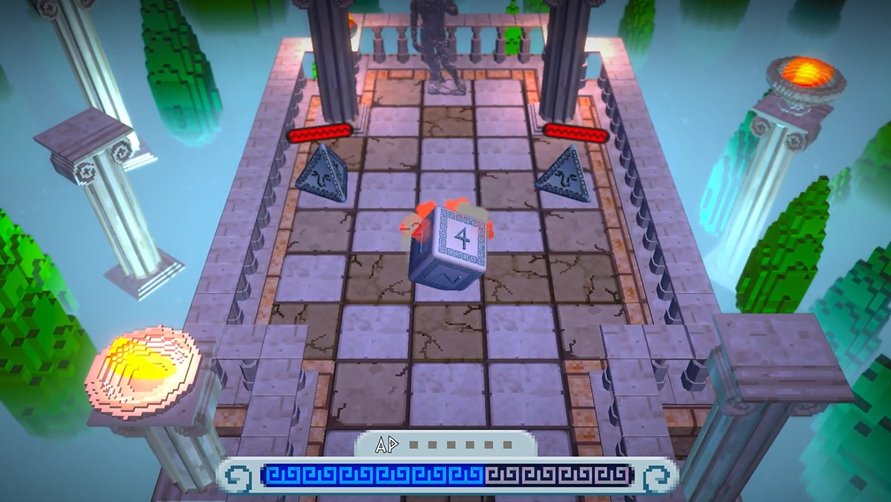
Begin with fewer enemies and a smaller playable area so the grid and action economy can be read.
Add walkable tiles and enemies so movement becomes a route-planning problem rather than a straight advance.
Ask the player to combine movement, positioning, and combat planning under the same action-point constraint.
Constraints
Every 3D tile was placed individually in Unity. The layout had to stay achievable at jam speed.
Paths and encounters had to remain compatible with the programmers' detection system.
Experimental levels were cut so three complete, escalating levels could ship on time.
Research
The design work focused on four observable variables: available action points, walkable tile count, enemy position, and the player's relative position. That kept spatial decisions connected to the mechanic instead of treating the environment as decoration.
Iterations
Observed
Other areas could be reached but offered no meaningful interaction.
Changed
I replaced tiles and rerouted pathways to restore access and create useful gameplay opportunities.
No before-state capture survives. The iteration is described here without inventing a visual comparison.
Design decisions
More possible positions meant the player had to evaluate routes instead of following a corridor.
Each additional threat changed the value of a move and made positioning more consequential.
Trees and fog supported the atmosphere while the tile grid retained responsibility for navigation.
Gameplay thinking
The player's roll supplies opportunity, but the level determines whether that opportunity can be converted into progress. Clear threats and paths make a failed run readable: the player can reconsider positioning rather than blaming an opaque space.
Process
Screenshots
Gameplay: shows the readable grid, action-point display, enemy spacing, and elevated camera.
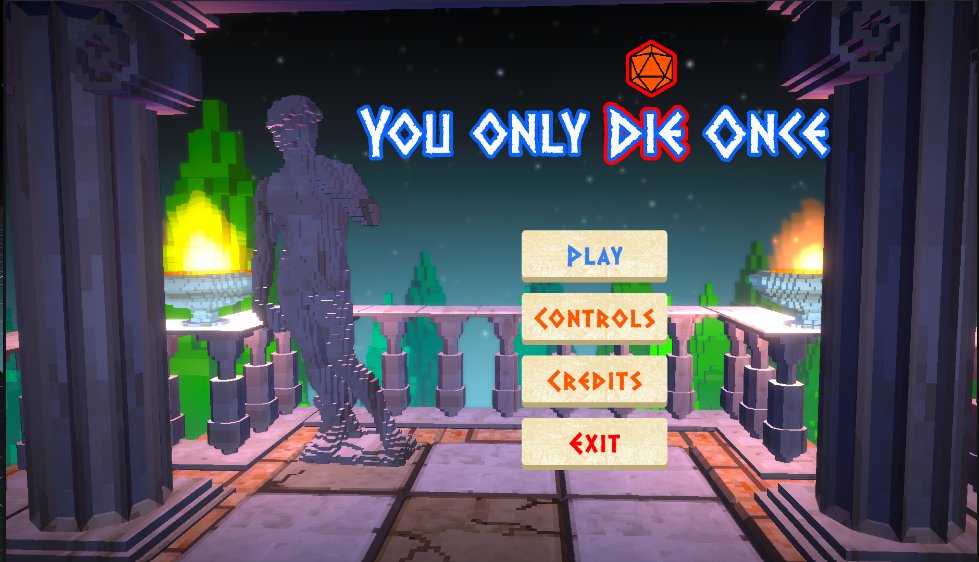
Title framing: establishes the temple language that carries into the levels.
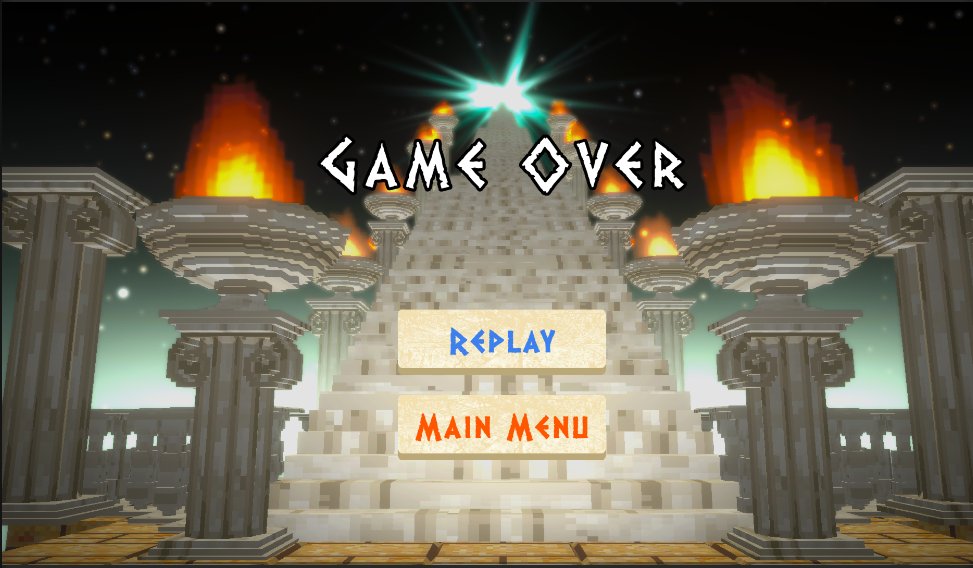
Failure: shows the immediate replay decision after a run ends.
Videos
No verified walkthrough video is available, so this case study does not substitute an edited reel. The public HTML5 build lets reviewers inspect movement, camera behavior, route readability, and encounter pacing directly.
Play on itch.io ↗Lessons learned
The most important revision was not visual polish. It was removing routes that failed to produce decisions. The project reinforced a practical rule: validate access and meaningful interaction before spending limited time on additional content.
Credits
The team used pre-existing audio. Individual contributions are stated explicitly because the public itch.io page lists only Rutvij as its author.